
Fertilizing new and older plants
Much discussion out there about if/when to fertilize grapevines. Much easier to find info on Muscadine vines. Last year, I put more fertilizer on the muscadines than I did on the grapes. I only put one application on the Lomanto and they struggled later in the year. The Black Spanish did pretty good with one application. I also had some Muscadine die back this spring as I did not make all applications. So I decided to treat both grapes and muscadine the same this year. Below is what I plan to adhere to:
On April 1st, May 1st, June 1st, July 1st
1st year rate of 4 oz of 10-10-10 per plant 12 inches from plant in circle, work into soil
2nd year rate of 8 oz of 10-10-10 per plant 12 inches from plant in circle, work into soil
On
April 15th, May 15th, June 15th, and July 15th
1st Year rate of 4 oz of 34-0-0 (Calcium Nitrate) or 2oz (Ammonia Nitrate) per plant 12 inches from plant in circle, work into soil
2nd Year rate of 8 oz of 34-0-0 (Calcium Nitrate) or 4oz (Ammonia Nitrate) per plant 12 inches from plant in circle, work into soil
3rd Year Use 3 lbs of 10-10-10 on May 1st
4th Year Fertilize as needed depending on growth of your vines
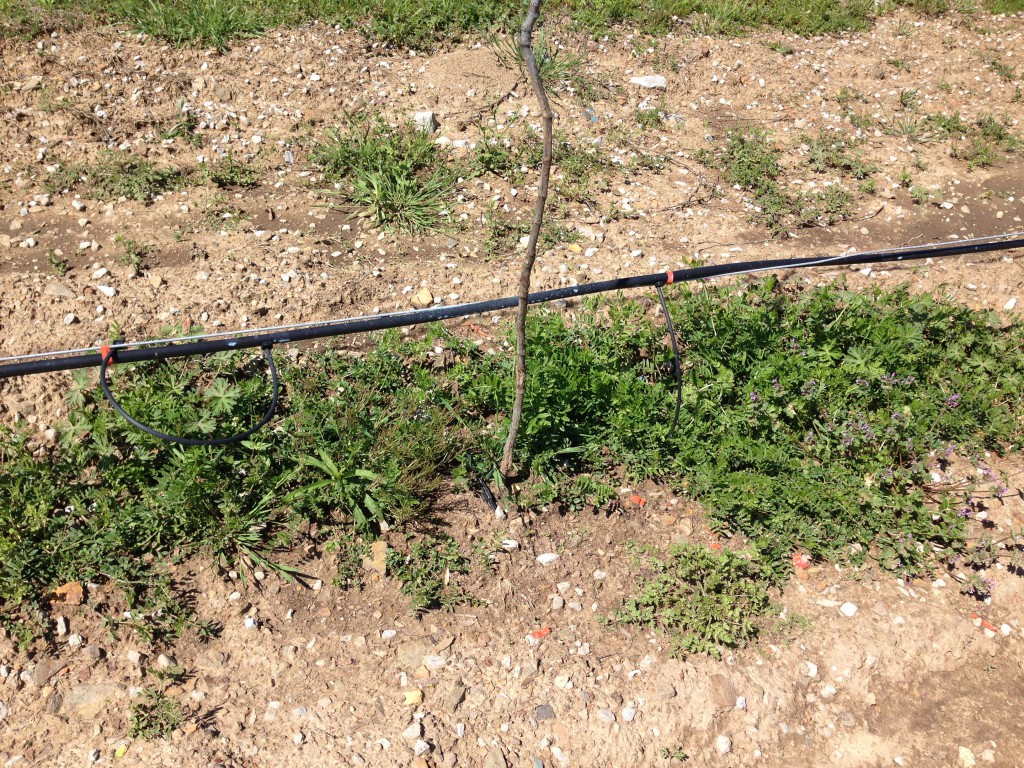
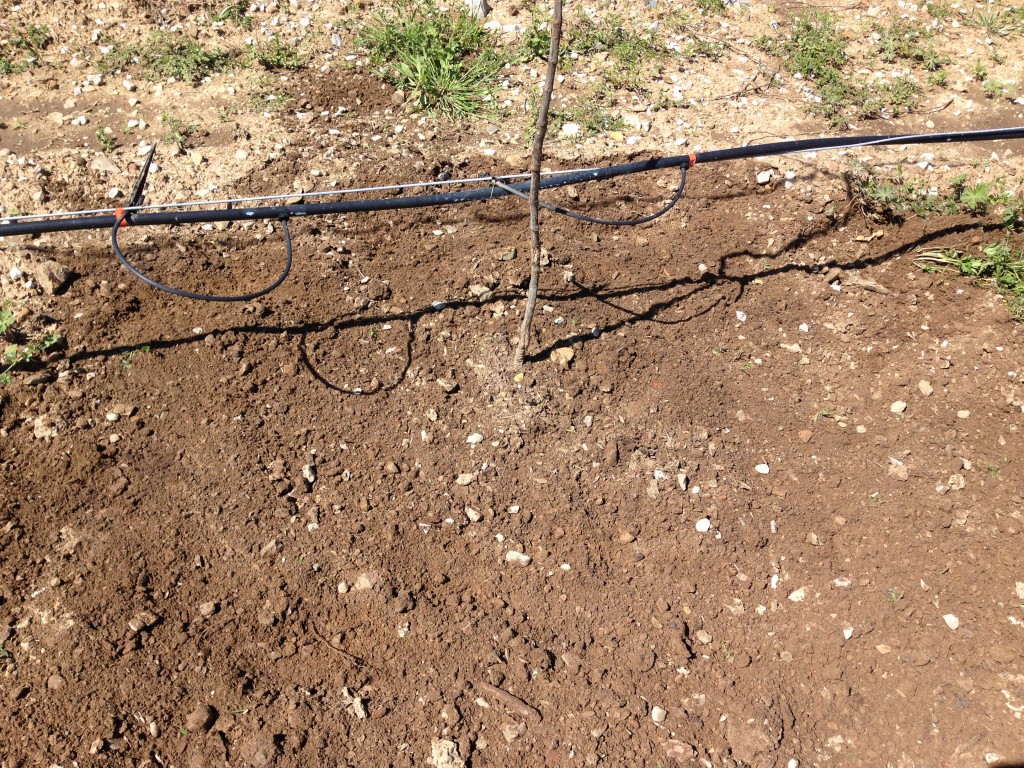
Alabama soils can be low in magnesium, foliar magnesium deficiency frequently becomes noticeable in mid-summer. You can spot this deficiency by the yellowing between the leaf veins on the older grape leaves. If the soil pH is low enough to need lime, use dolomitic lime to help prevent magnesium deficiencies.
You can also use magnesium sulfate (epsom salts) to counter the magnesium deficiency. Young plants should get 2 ounces applied around each vine, keeping the salts 6 or more inches away from the trunk. Apply 4 to 8 ounces per mature, bearing vine. It may require 2 to 3 years of magnesium application to bring the level up for best plant performance.
Reference source: http://www.aces.edu/pubs/docs/A/ANR-0012/ANR-0012.pdf
Bud Break in the Vineyard
This is probably one of the most exciting dates in the vineyard especially after you just planted a few hundred dollars in new plants. This is the first sign that all that hard work will pay off with new growth.
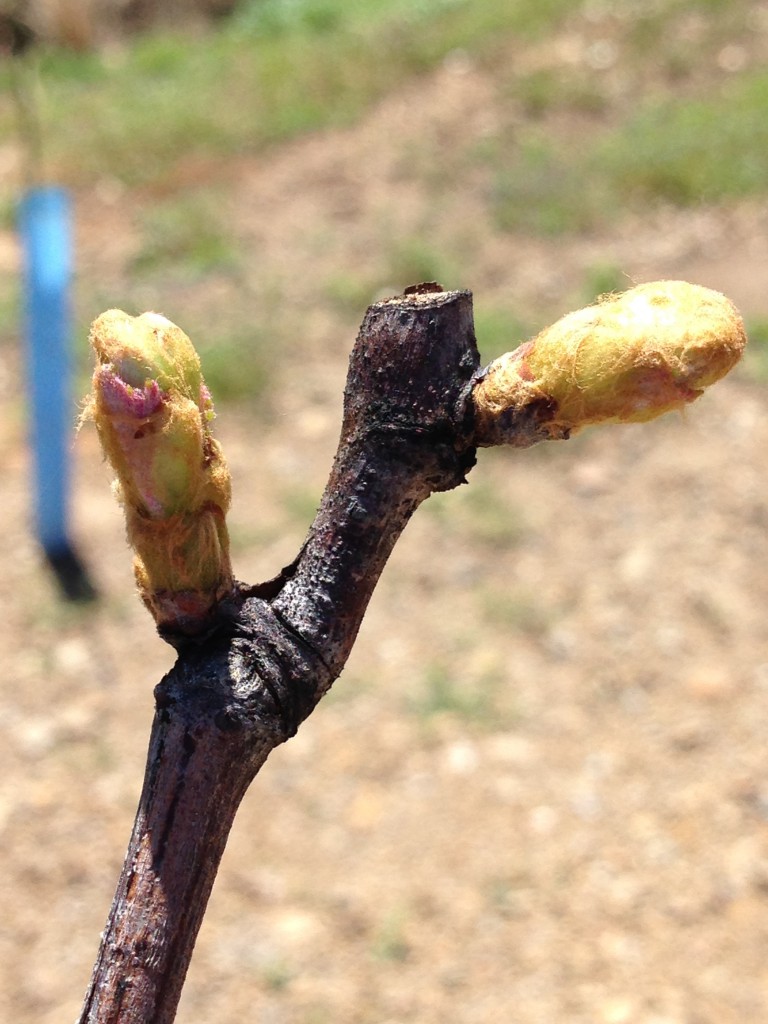
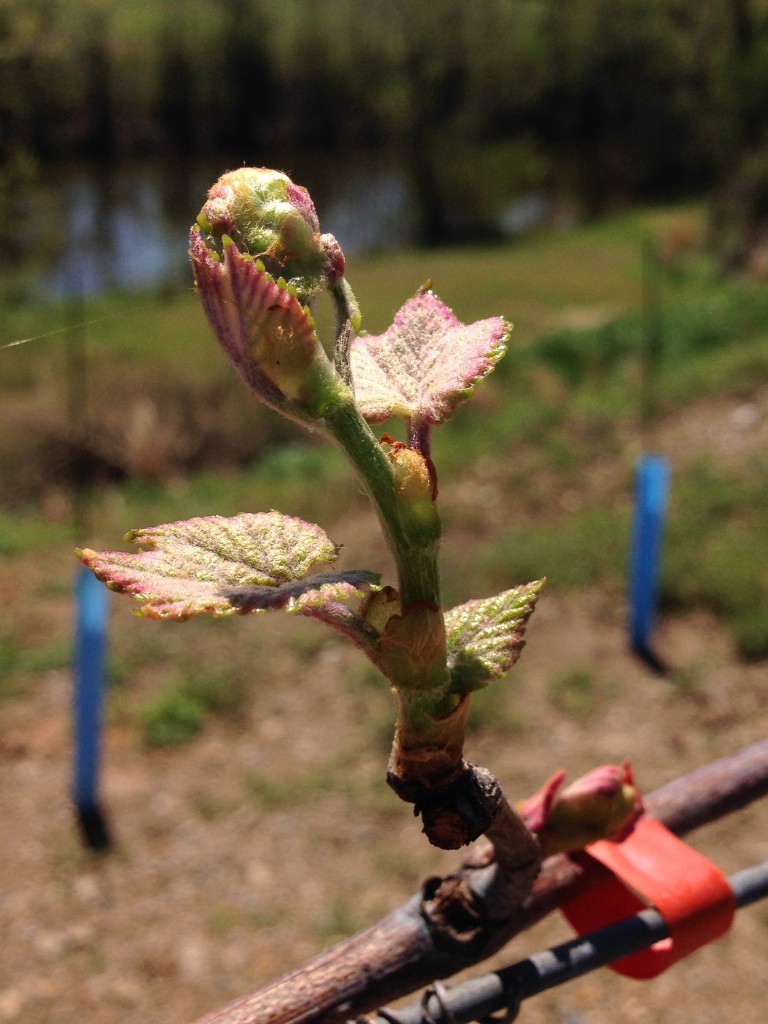
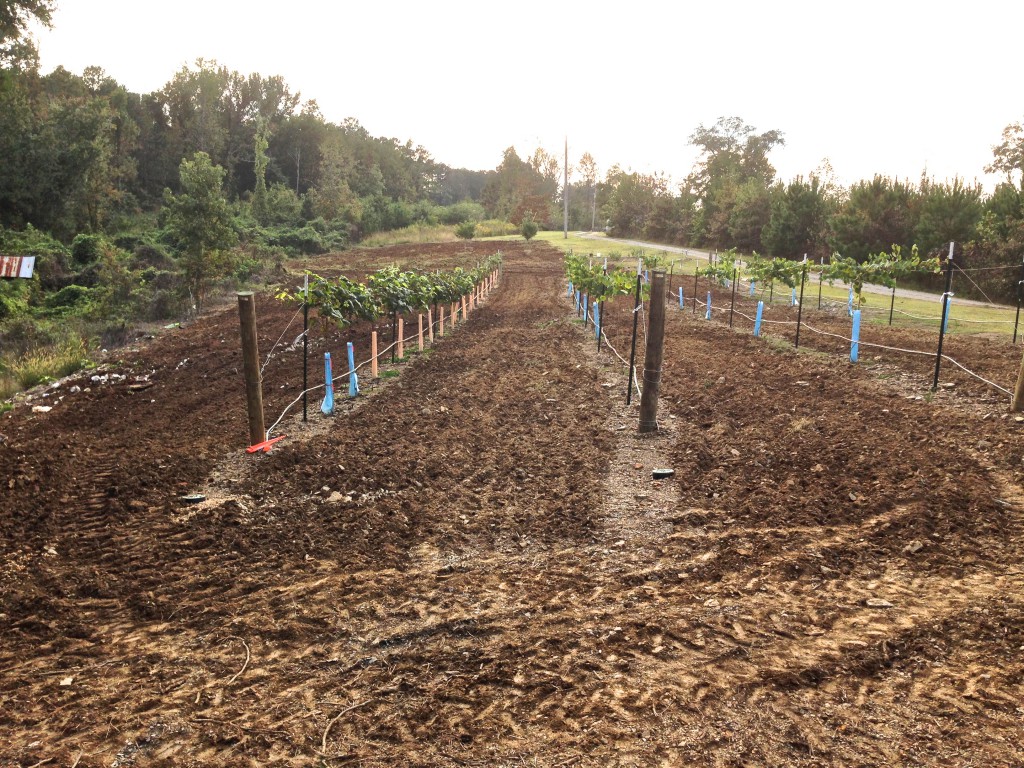
These are second year Lomanto and Black Spanish vines.
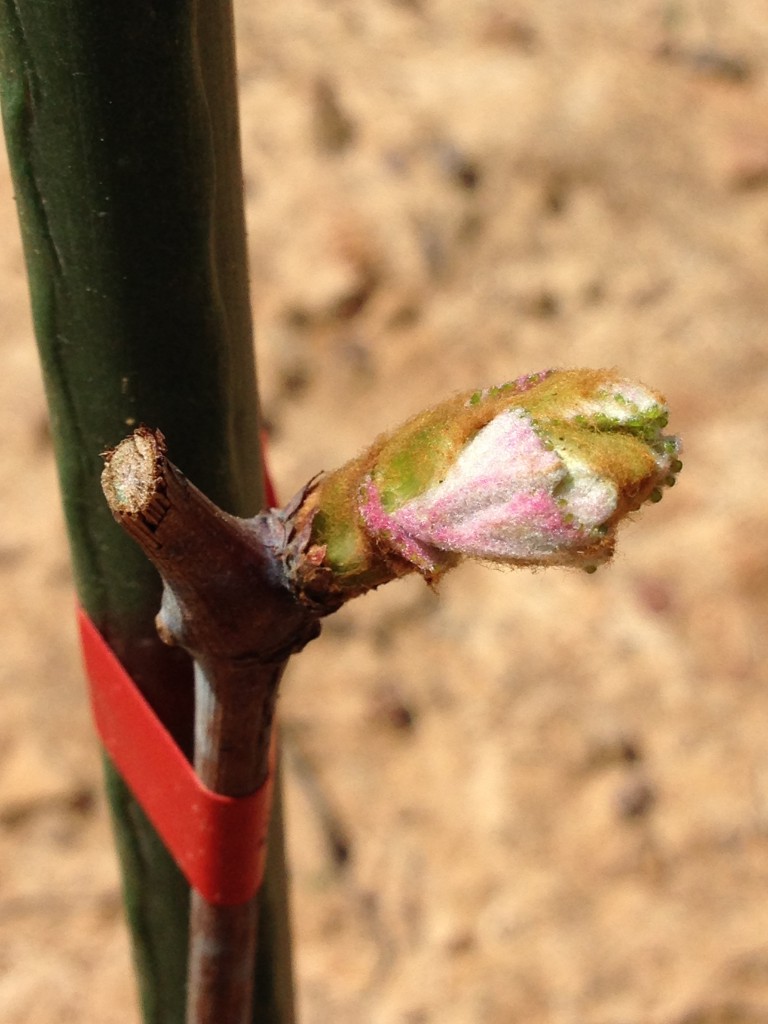
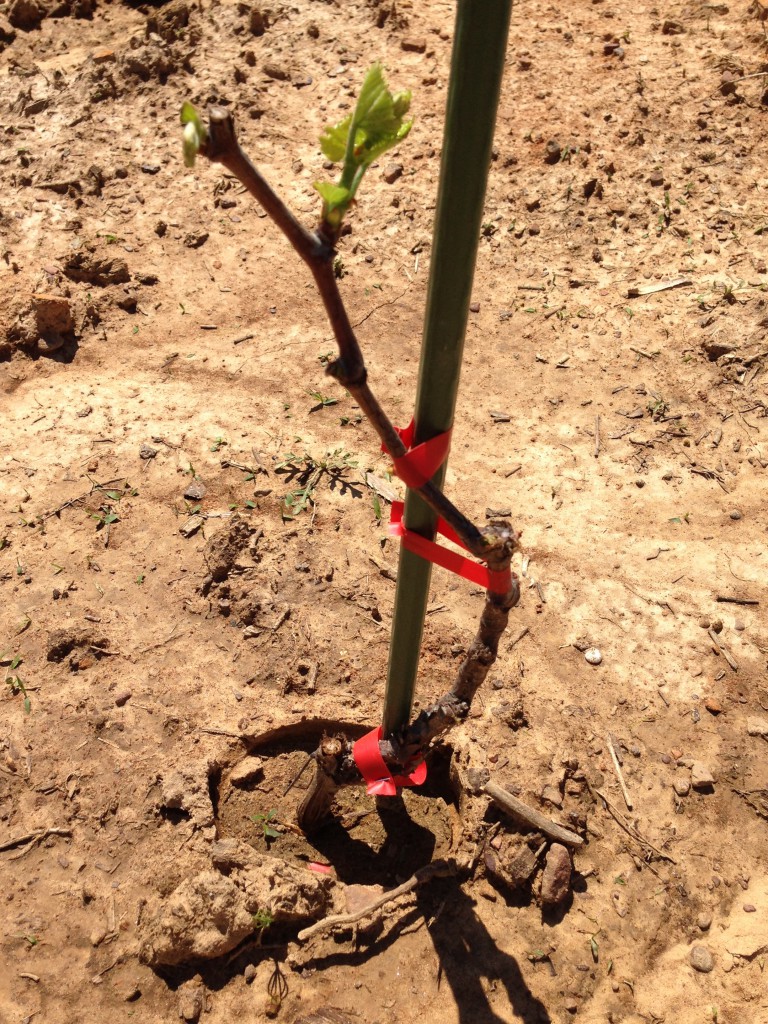
and these are the new Blanc Dubois vines. So far it looks like all new plants are coming out of dormancy.
Pruning of the Vines
A little later than I had planned, but I finally pruned the older vines this weekend. Decided to go with top cordon spur pruning system for all the vines. I could get a little more production from the black spanish if I used a cane pruning system, but it’s a lot more maintenance. Both systems are used for these vine types.
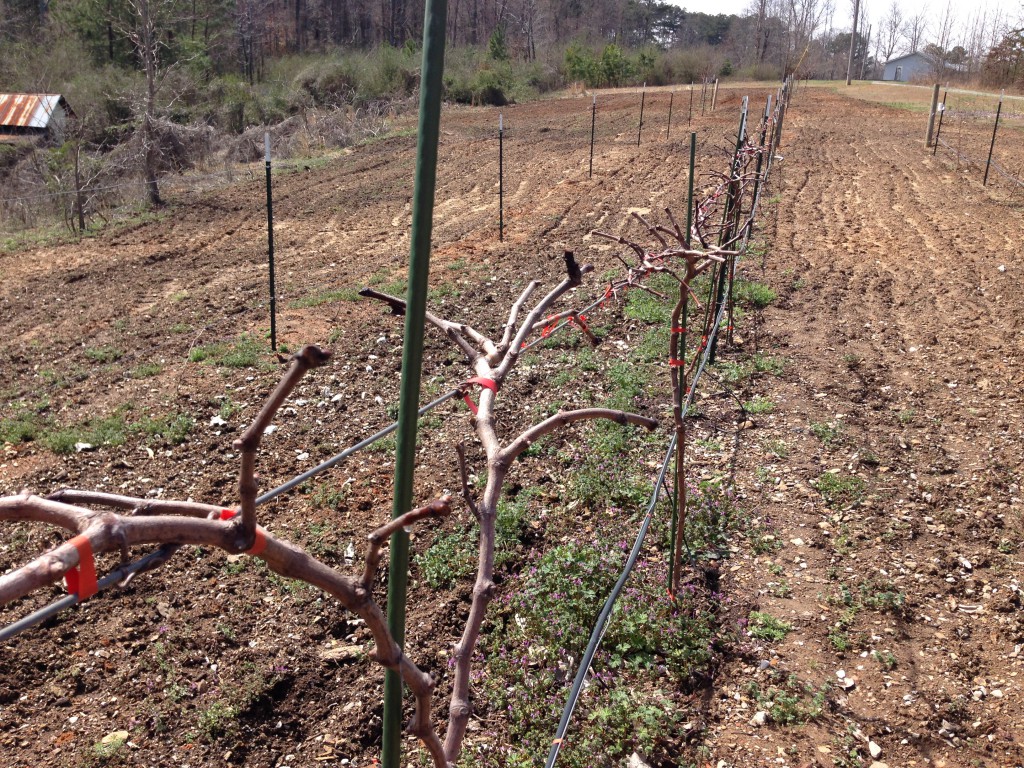
Pruned Black Spanish grapevines above
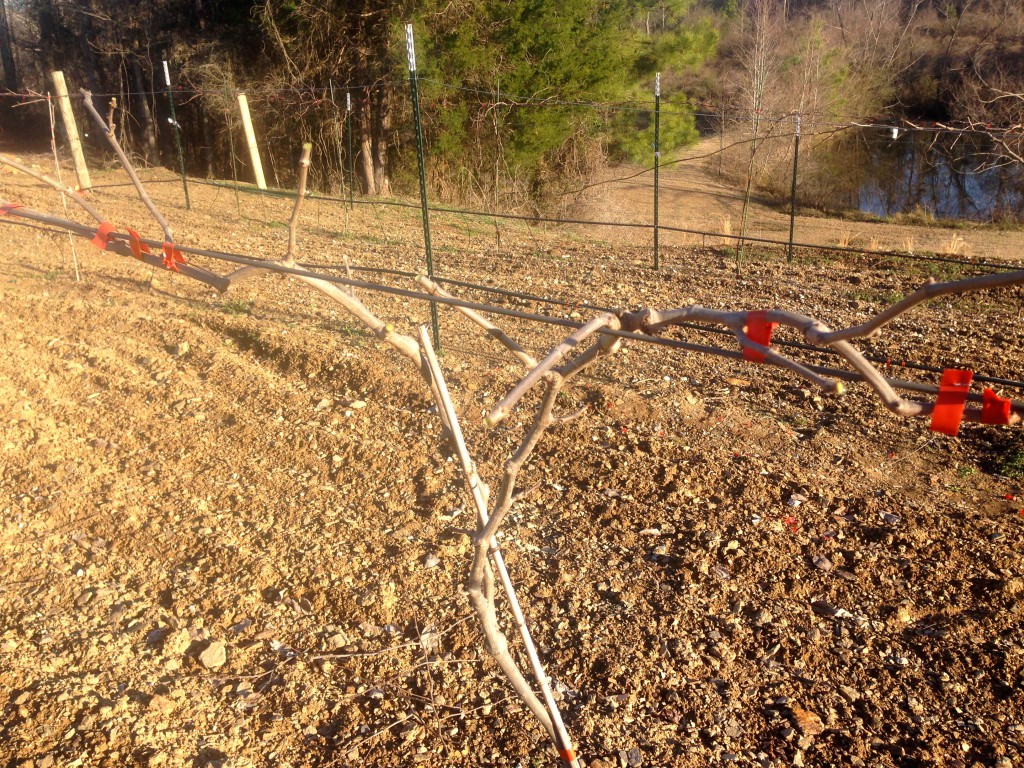
Pruned Noble Muscadine vines above
Installed T-Post and pruning new vines today
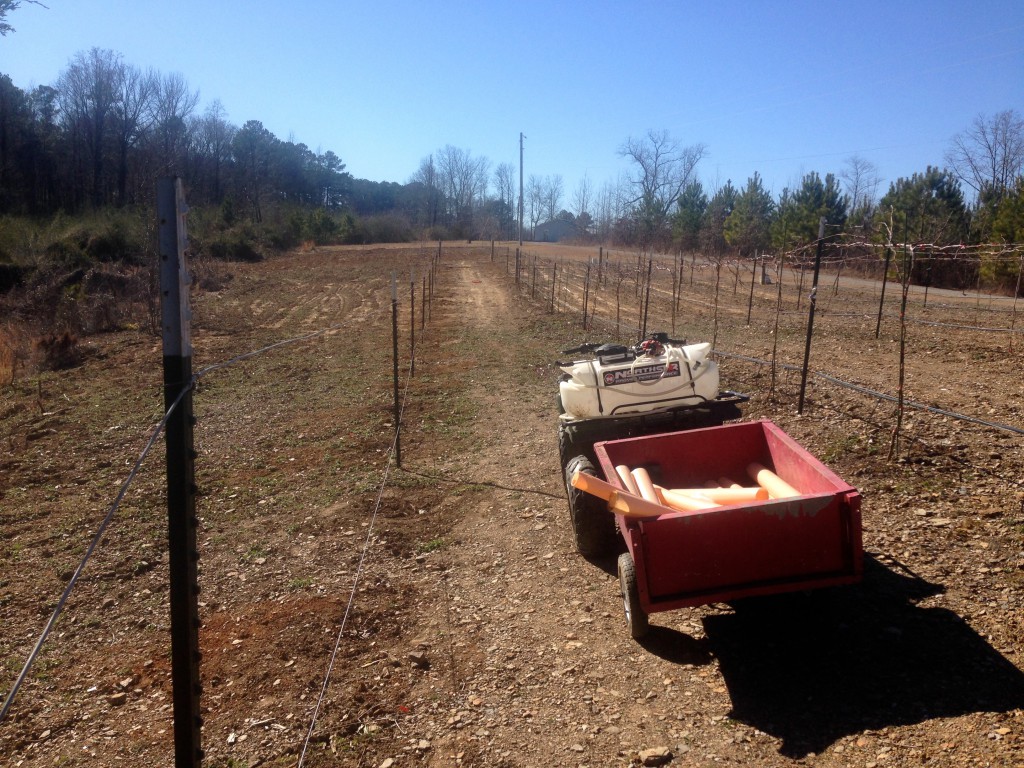
Today was a great day in the vineyard. It was like a spring day, 60deg and not a cloud in the sky. Added the remaining 7 T-Post and tightened the wire. After lots of research I decided to use high cordon trellis system on the new Blanc Dubois vines. Plus that’s what I’m using on the other vines.
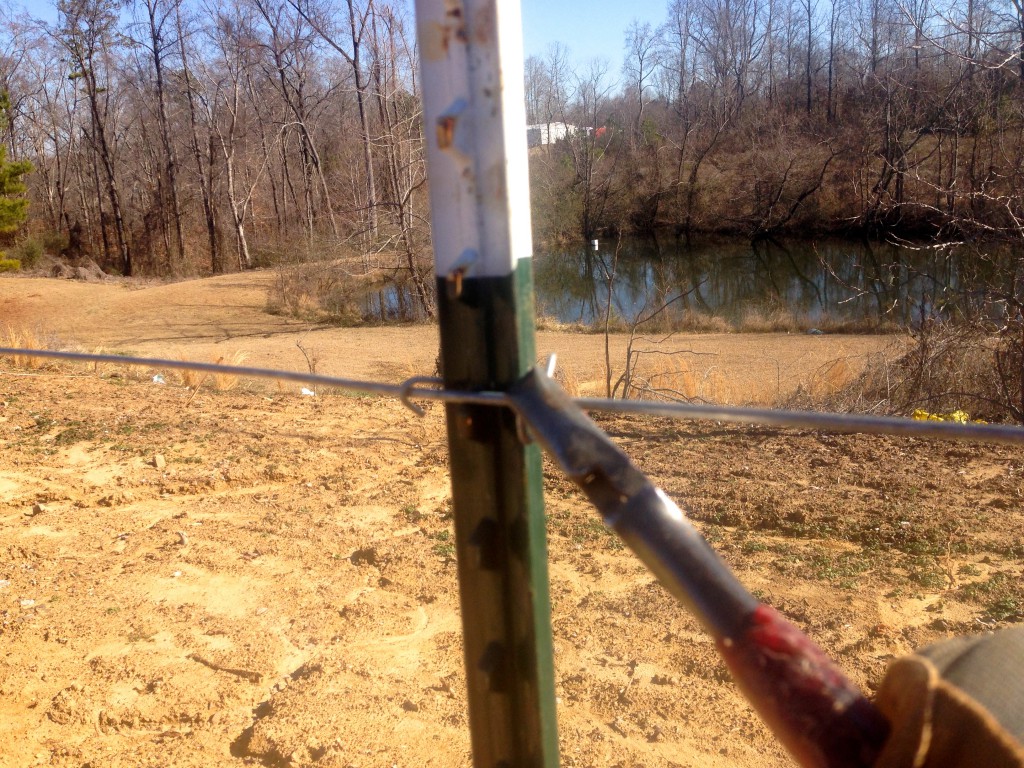
The wire is held in place with a clip. Pretty simple system that is easy to work with.
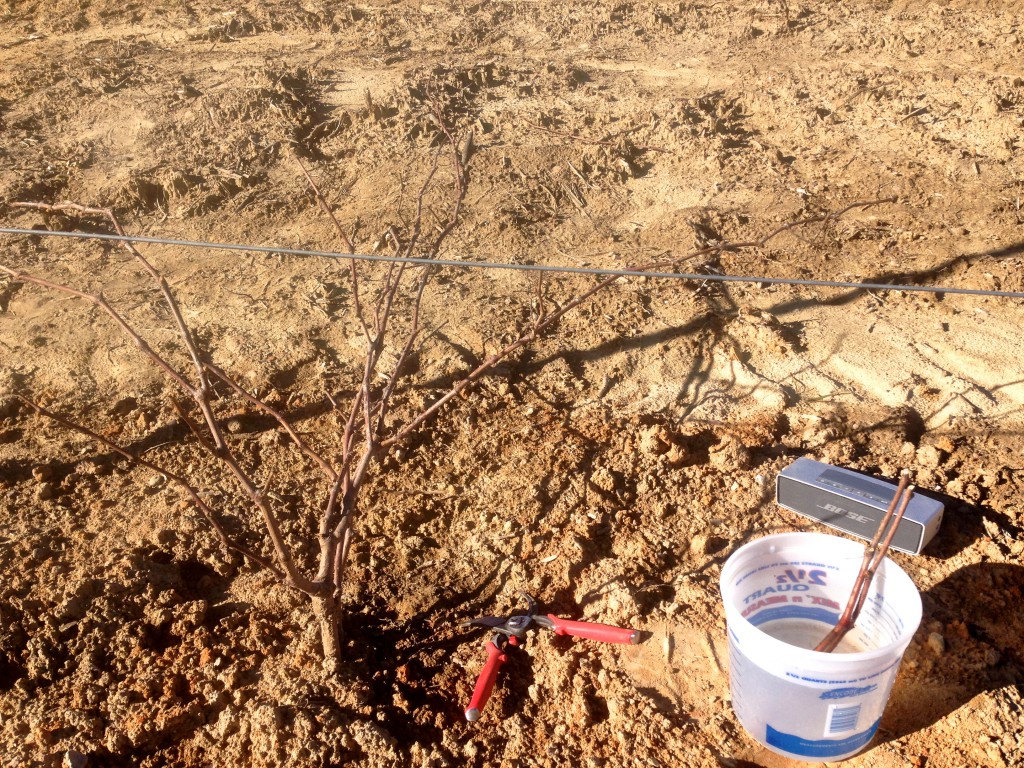
Decided to go ahead and prune the new vines I planted a couple of weeks ago. When you get new vines, they can have 1-3 years of growth that need to be trimmed to a single strong vine. I put the strongest of wood trimmed from vines in a bucket of water so they don’t dry out. I later planted these in potting soil after dipping in root hormone to promote rooting. I’ll keep them in the shop with no light so they don’t break bud too soon.

Here’s the same vine partially trimmed.
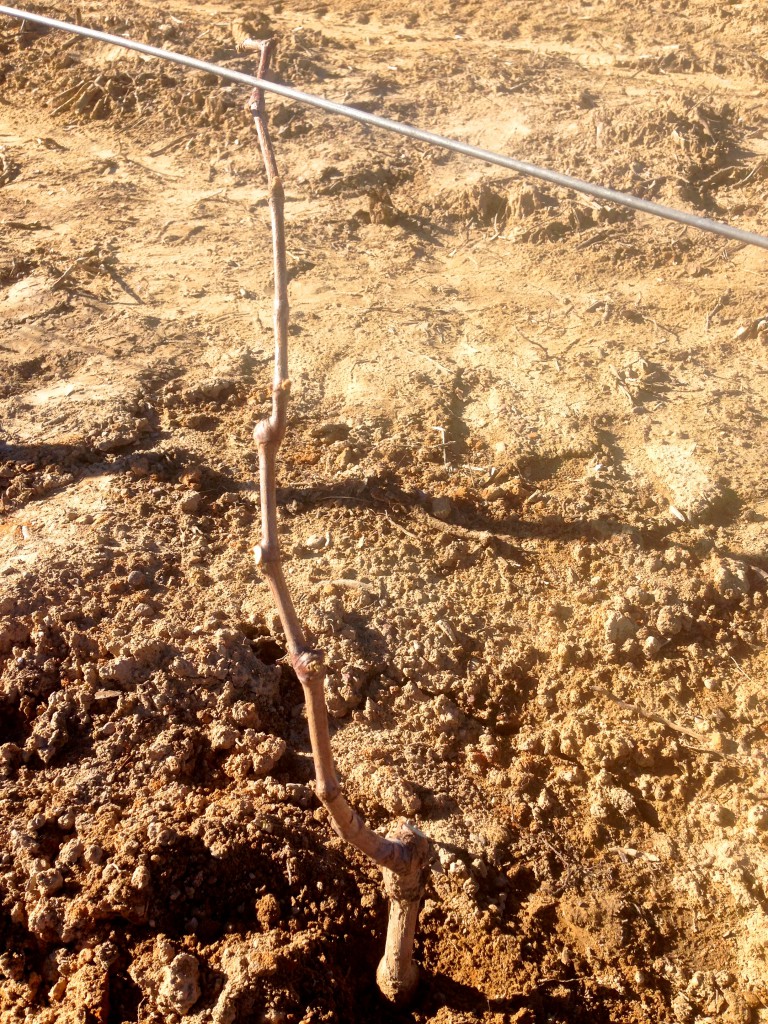
Done with all the cuts and nicked out all but the top three buds. After bud break I will select the strongest bud and pinch off the other two. I only need one to grow up to the top wire.

This is a Lomanto grapevine I planted last year. That is a huge vine from one year of growth. I planted 10 but after seeing the vigor of this vine, I decided to add more Black Spanish this winter as it’s not near as vigorous. This means I wont need to trim and train the vines near as much. I’m still searching for the right vines for the terroir of my farm.

I also planted several types of Muscadines. This is a Noble vine. They are very vigorous but still not near as much as the Lomanto.
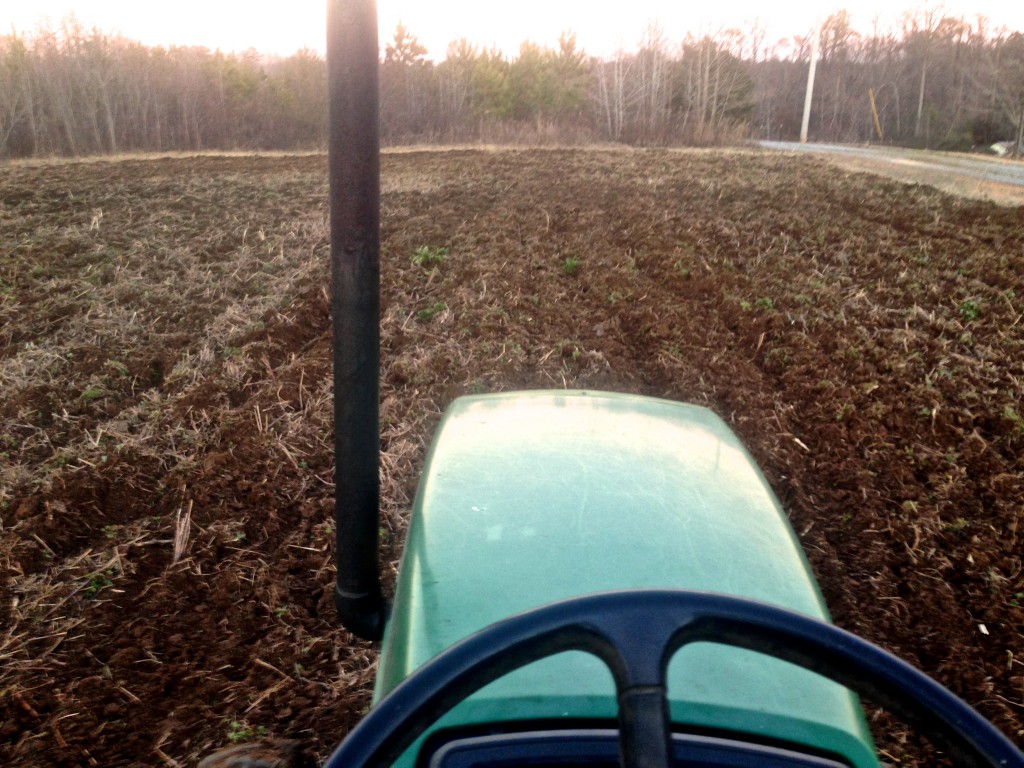
Turned the garden over just before it got dark. Long good day on the farm.
Adding Blanc Dubois grapevines and more Black Spanish
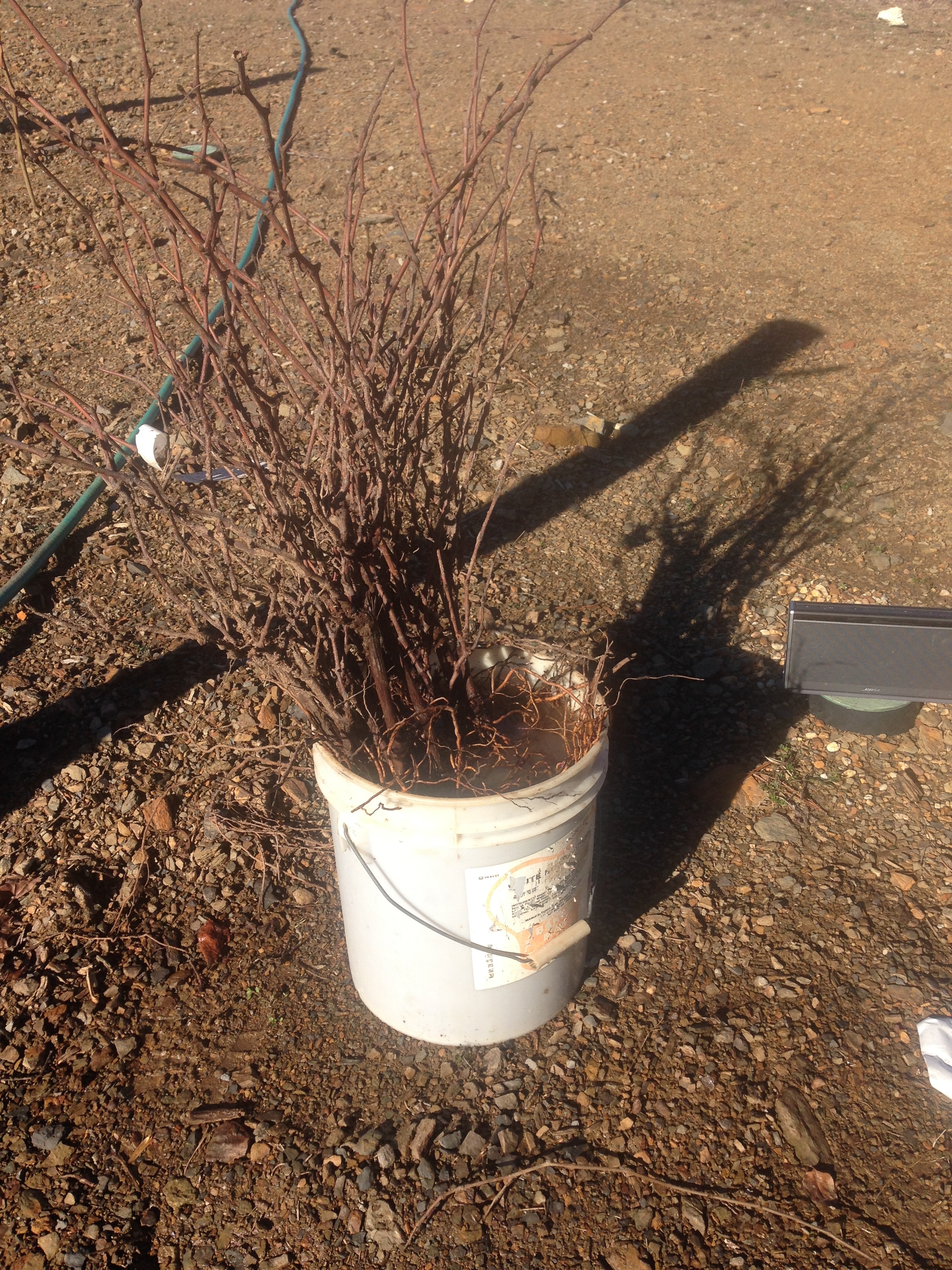
Decided to add a row of Blanc Dubois grapevines to the vineyard. 30 vines to be exact. Living in the South we are limited to types of vines we can grow due to pierce disease. After a lot of research I decided on this vine. Plus I needed some white grapes, I’ve only planted red to date. I hear some people don’t want or like a red wine. Don’t understand that, but okay, white will be added. The Black Spanish did pretty good last year so I decided to add another half row. I now have about 30 of those vines as well. They didn’t have issues like the Lomanto did last year. They also don’t grow near as fast. With the vigor less, should make it easier to work with.
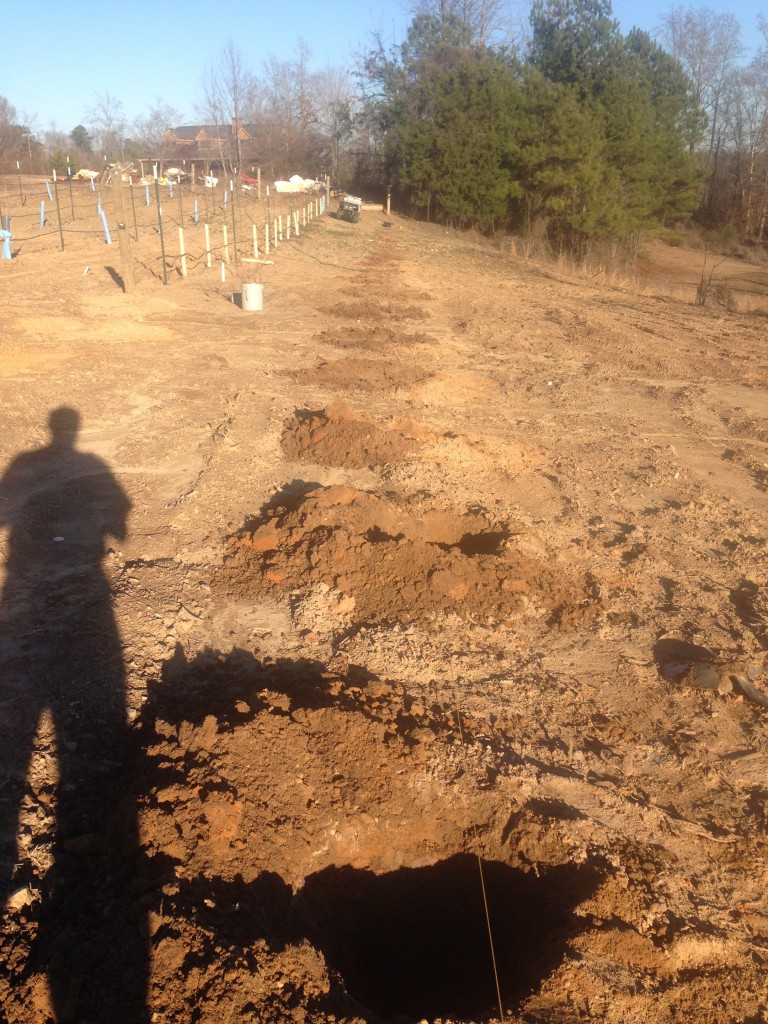
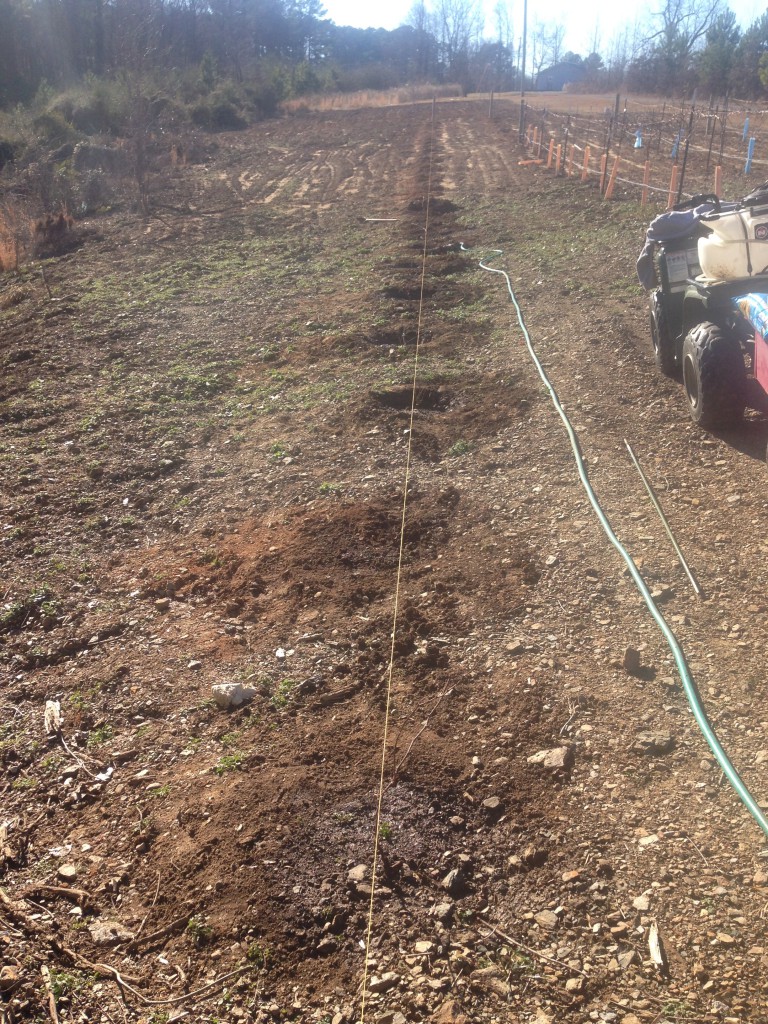
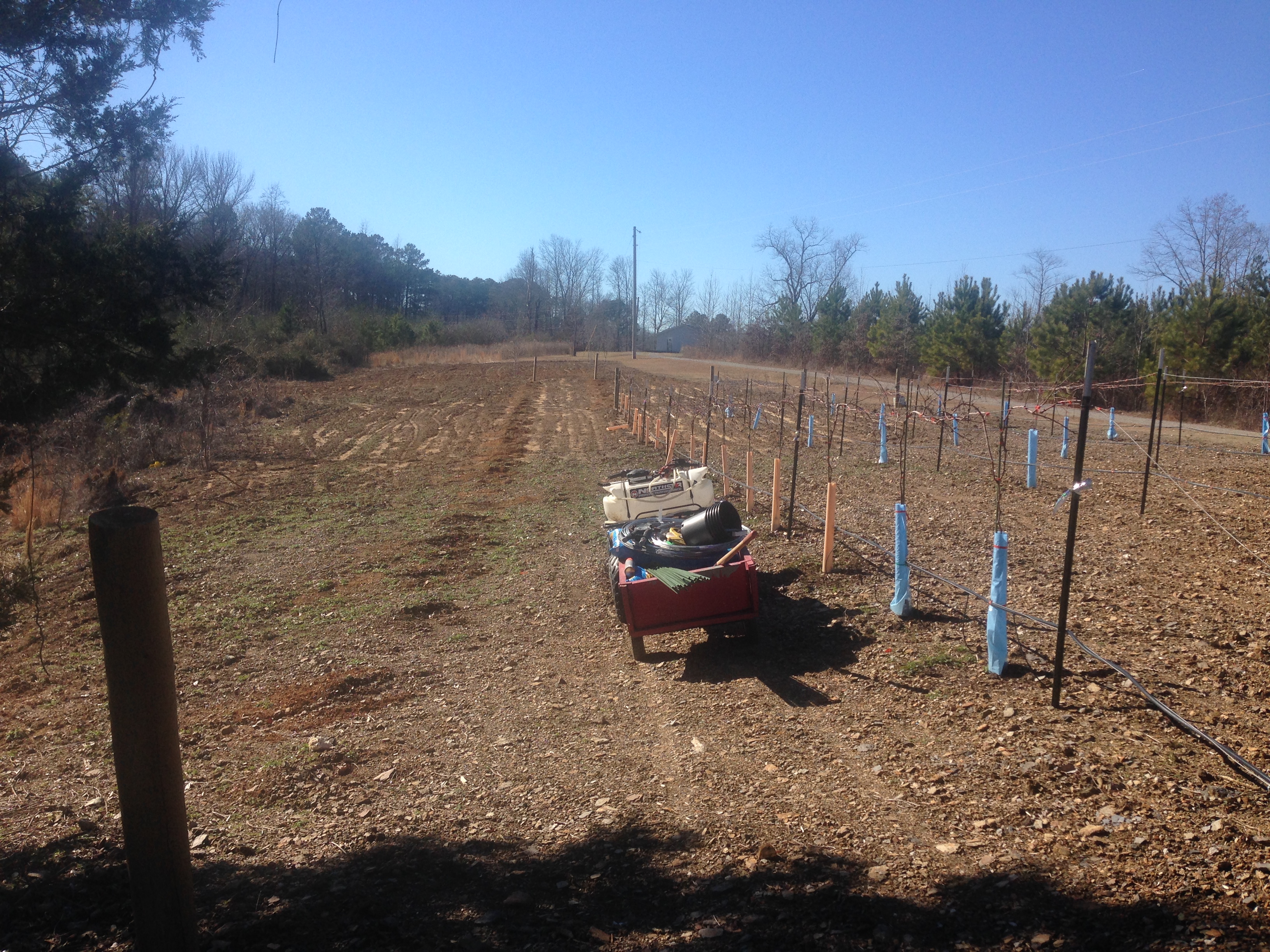
My poor wet, tired feet.
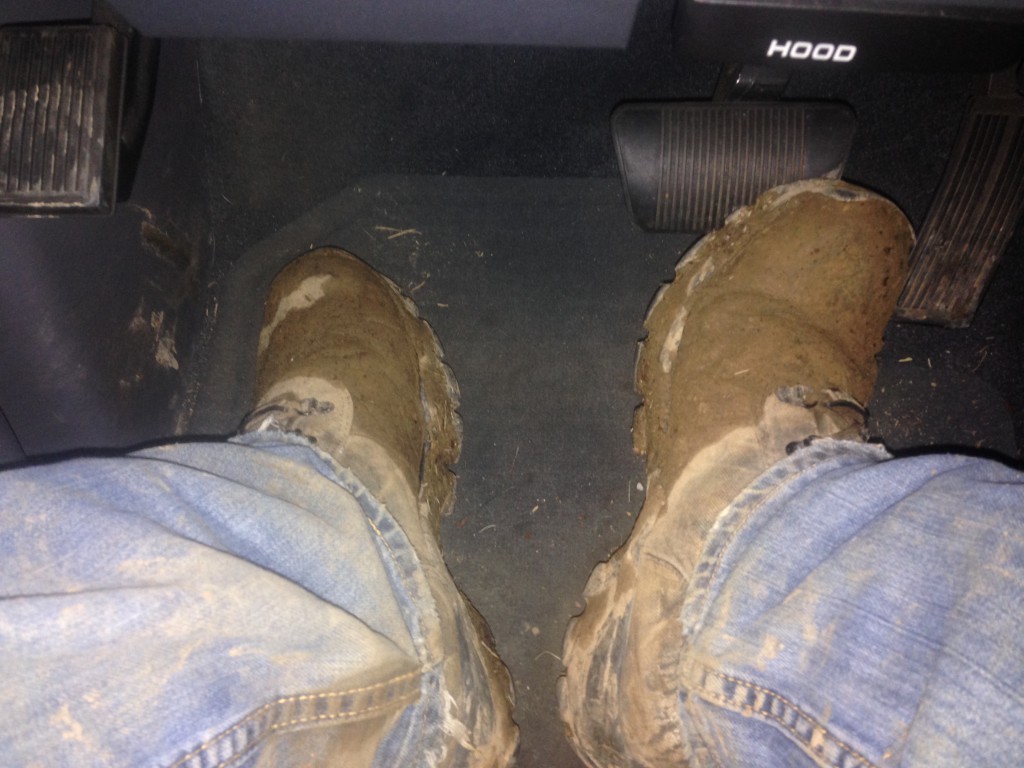
Hiding from you
Shhhh just walk by. You see nothing…. Found this little guy hiding out in one of the growth tubes around my grapevines.
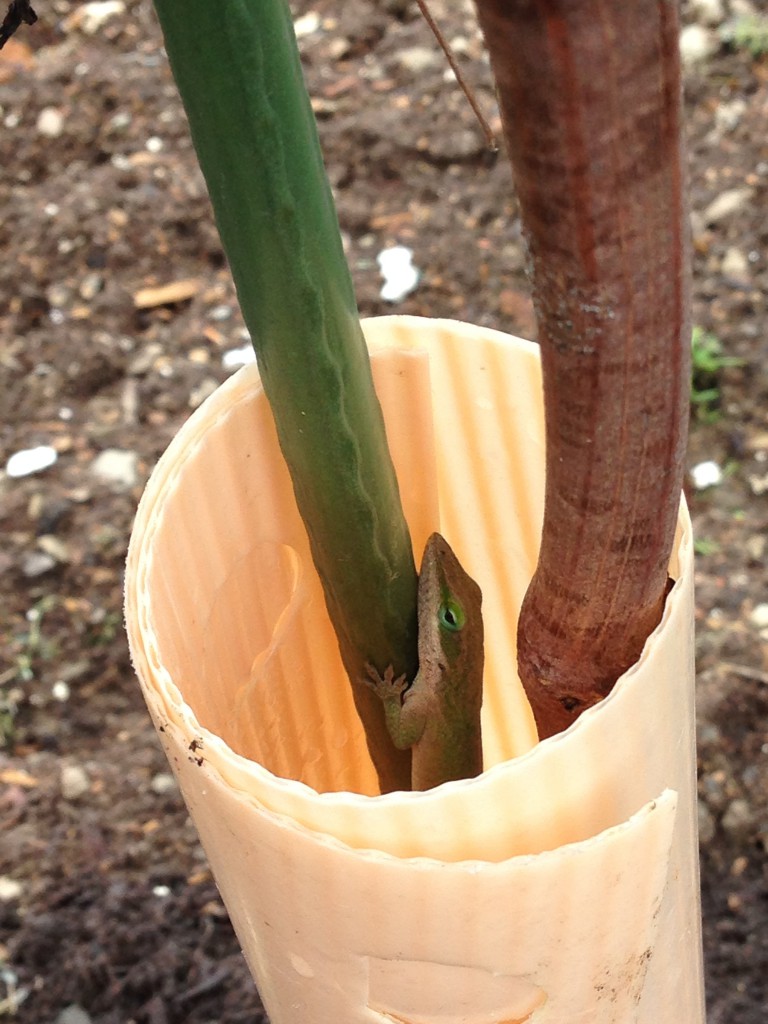
Lime application
Put down about a 900lbs of lime today. PH was a little low. Trying to get it up to 6.5 from 5.9 – 6.0.
Japanese beetles are attacking
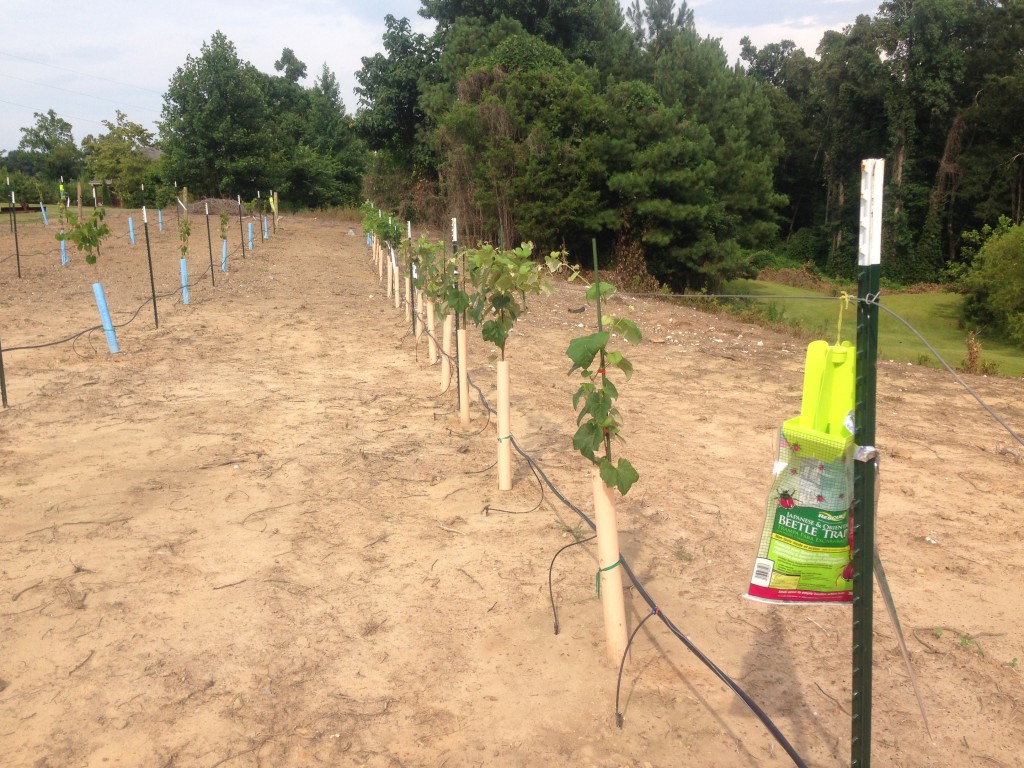
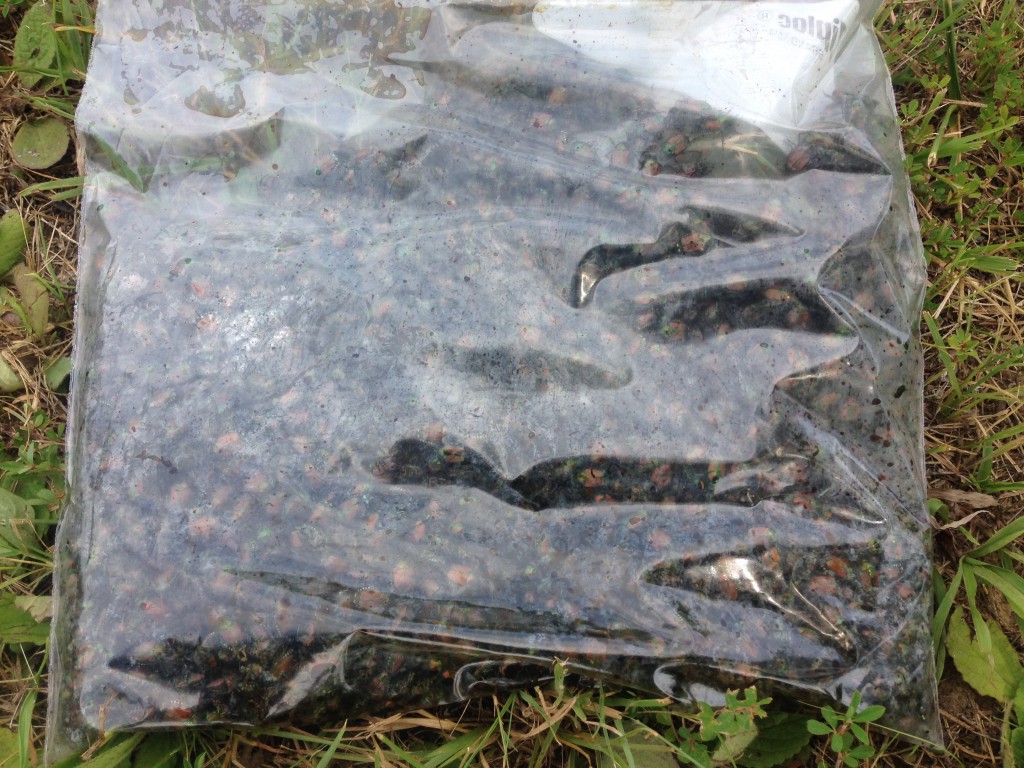
Well, I leaned a valuable lesson today. I found beetles on my grapevines last week, so I picked up some beetle bags with attractant. It works great, just don’t put near your grapevines. I had bags on each end of the rows and the vines closest to bag were covered with jap beetle and the vines in the middle had few. Note to self: put bags far away from vines next year. Checkout the bag of beetles. I mean what do you do with these things? Also, after a few days of decaying beetles, those bags stink it up pretty good.
They are alive!
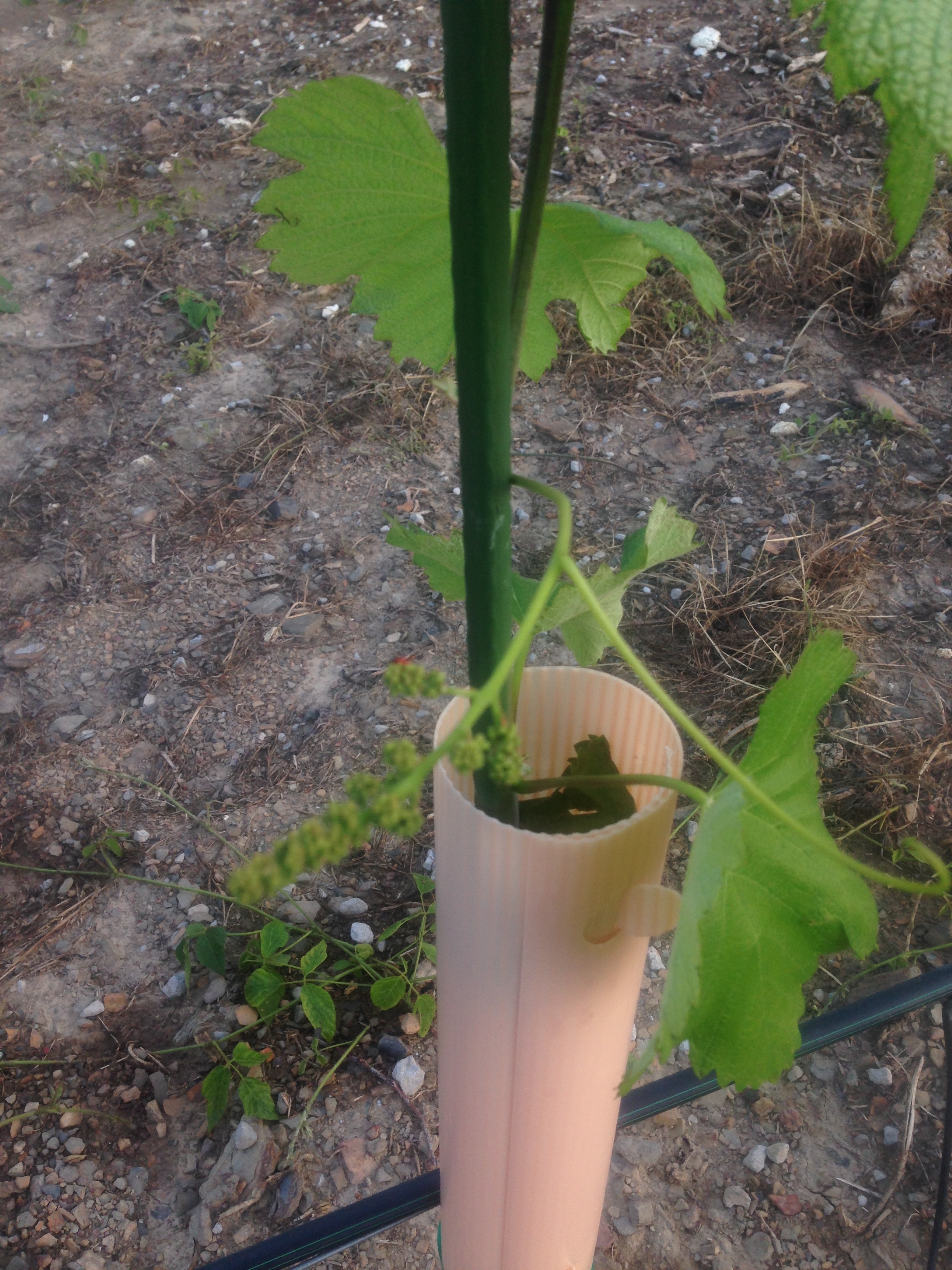
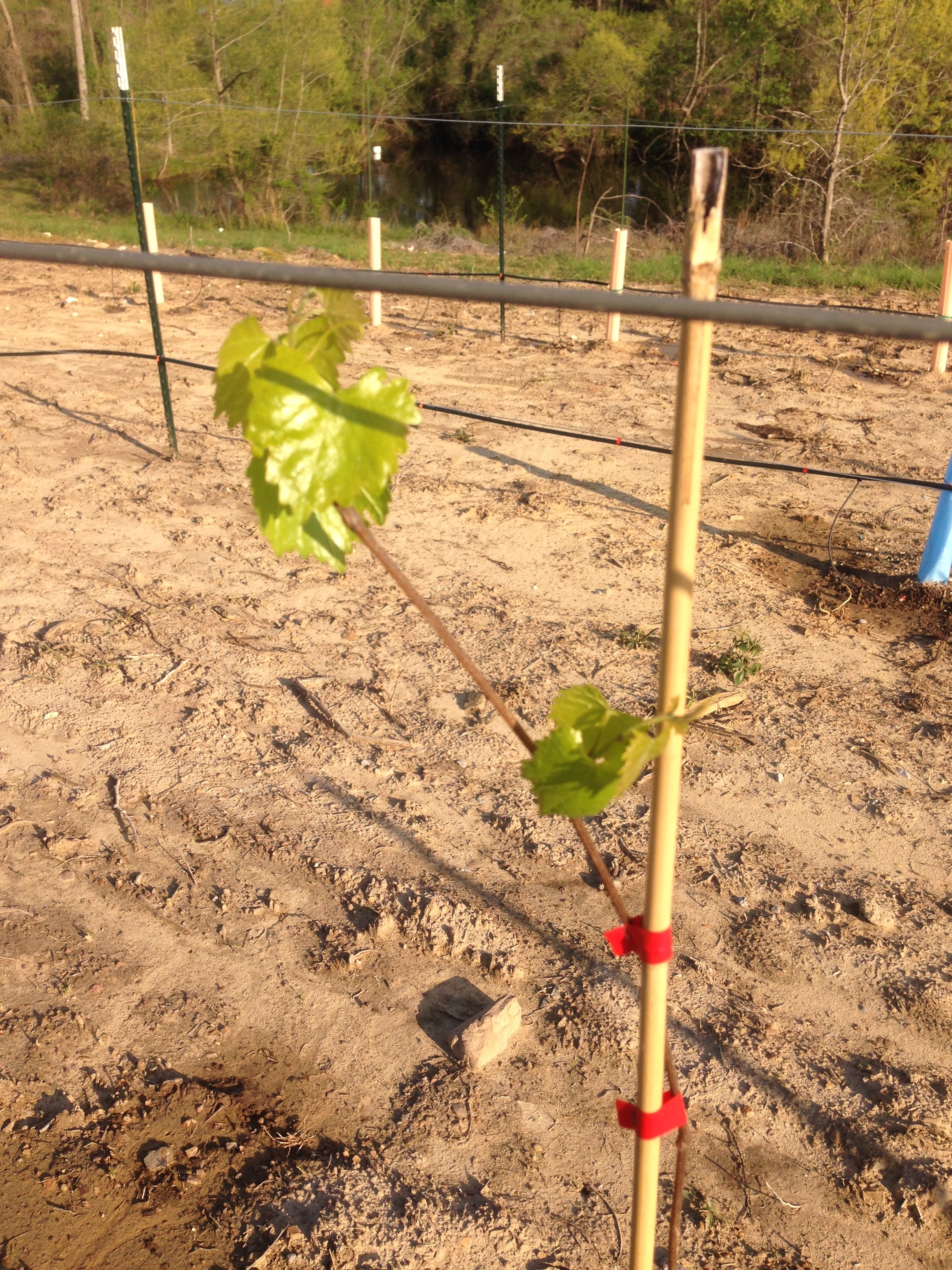
The grapevines and muscadines are alive and growing well. First cluster of grapes. Shame I have to pinch off. Can’t let them grow the first two years.
Planted Grapevines today
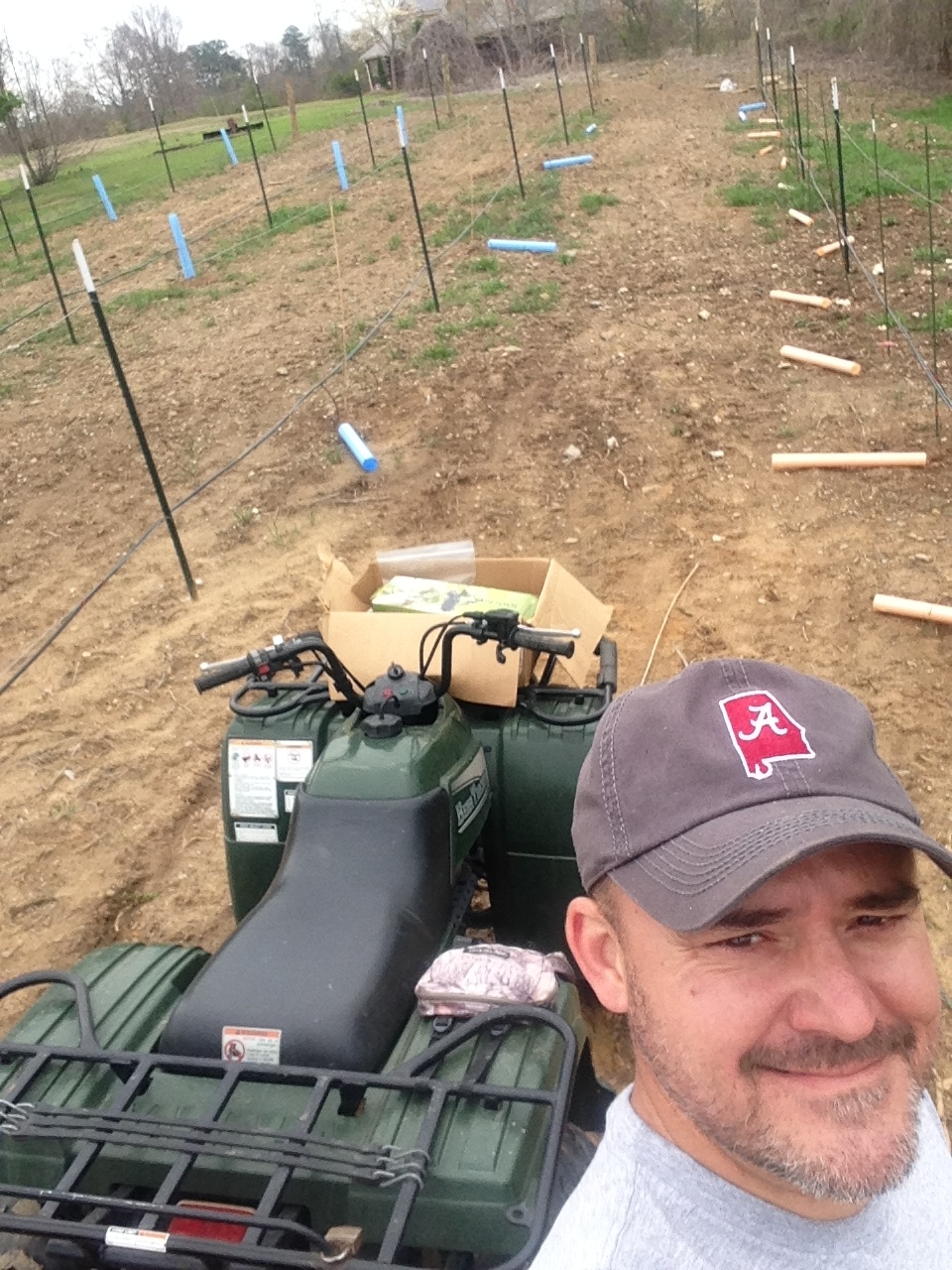
The Lomanto and Black Spanish grape vines came in this week. 9 of each. Just enough to test them out and see if this is what I want to grow. Once in the ground I put some grow tubes on them like the Muscadines. They help them grow faster and keep animals off the young shoots.
Before and After


 Lasterday Wines
Recent Comments